
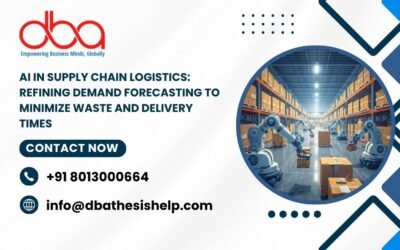
AI in Supply Chain Logistics: Refining demand forecasting to minimize waste and delivery times
AI in Supply Chain Logistics. The modern global supply chain is facing a massive predictability crisis. Consumer trends shift overnight, geopolitical bottlenecks pop up constantly, and climate-driven disruptions are the new normal. For legacy logistics systems, relying on simple historical averages is no longer enough to stay competitive.
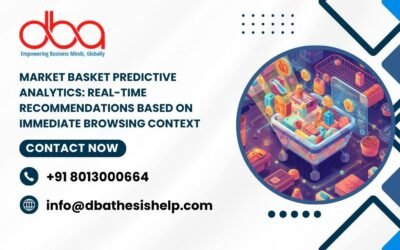
Market Basket Predictive Analytics: Real-time recommendations based on immediate browsing context
Market Basket Predictive Analytics. We have all been there. You are browsing an online store for a camera, and the moment you click “Add to Cart,” the site instantly suggests the exact memory card and lens cleaning kit you actually needed. It feels like mind reading, but it is actually Real-Time Market Basket Predictive Analytics at work.

Direct-to-Consumer (D2C) AI Growth: How AI scales small brands by automating supply chains
Direct-to-Consumer (D2C) AI Growth: How AI scales small brands by automating supply chains Direct-to-Consumer (D2C) AI Growth. The ecommerce landscape is shifting rapidly. For emerging brands, managing inventory, predicting demand, and handling logistics used to...

Robustness Testing & Benchmarking: New standards for validating AI reliability in critical infrastructure
Robustness Testing & Benchmarking. As artificial intelligence moves from low-stakes consumer applications to critical infrastructure—like nuclear power grids, automated transit networks, and healthcare delivery systems—the definition of “reliability” must change. In these high-stakes environments, a model accuracy rate of 95% isn’t an achievement; it’s a catastrophic multi-million dollar liability.

AI Data Governance Frameworks: Formal policies for “data provenance” and model accountability
AI Data Governance Frameworks. In the rush to deploy machine learning models, many organizations overlook a critical reality: an AI system is only as reliable, ethical, and legal as the data that trained it. As regulatory bodies globally crack down on copyright infringement, data privacy violations, and algorithmic bias, ad-hoc data management is no longer viable.
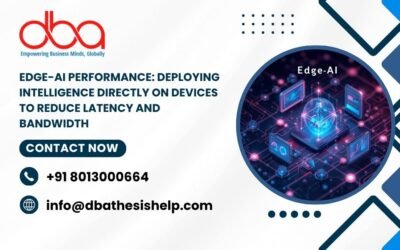
Edge-AI Performance: Deploying intelligence directly on devices to reduce latency and bandwidth
Edge-AI Performance. For years, the cloud has been the undisputed brain of artificial intelligence. Centralized data centers crunched massive datasets, sending decisions back to devices over the internet. But as we demand instant responses from autonomous vehicles, medical devices, and smart factories, waiting for a round-trip to a distant cloud server is no longer viable.
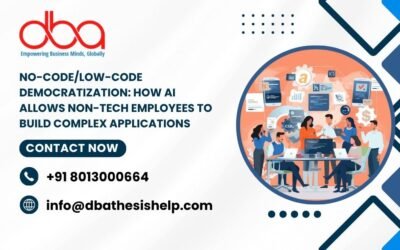
No-Code/Low-Code Democratization: How AI allows non-tech employees to build complex applications
No-Code/Low-Code Democratization. For decades, building a software application required a deep understanding of syntax, compilers, and infrastructure. Today, the rise of Low-Code/No-Code (LCNC) platforms—supercharged by Artificial Intelligence—is dismantling these technical barriers. This democratization means that business analysts, marketers, and HR specialists can now architect complex, enterprise-ready applications without writing a single line of traditional code.
Explainable AI (XAI) in IT Operations: Making complex algorithmic decisions transparent for audits
Explainable AI (XAI) in IT Operations. Artificial Intelligence for IT Operations (AIOps) has revolutionized how enterprises manage infrastructure. However, when an algorithm automatically shuts down a server or reroutes traffic, IT leaders need to know why. This is where Explainable AI (XAI) in IT Operations becomes critical, transforming “black-box” systems into transparent, accountable partners.

LLM Management at Scale: Optimizing and controlling large language models across an enterprise
LLM Management at Scale. Moving a single Large Language Model ($LLM$) from a prototype script into production is relatively straightforward. Scaling $LLMs$ across an enterprise—where dozens of distinct engineering teams deploy a variety of commercial and open-source models—presents a significant operational challenge. Without centralized coordination, costs escalate rapidly, rate limits disrupt customer-facing applications, and unmonitored text outputs introduce compliance risks.

AI-Driven Cybersecurity Defense: Real-time threat detection using behavioral pattern recognition
AI-Driven Cybersecurity Defense. Legacy cybersecurity defenses rely heavily on signatures—digital fingerprints of known malware or static hashes of malicious files. While this method handles yesterday’s threats effectively, it is completely blind to novel, zero-day attacks, polymorphic code mutations, and credential-based intrusions.